Details
Title:
	Death Stranding 2: On the Beach

Developers: Kojima Productions
Director:  Hideo Kojima
Releases:
	June 2025 (Game)
But I had it wrong. Being a father didn’t make me scared, it made me brave.
4.5 out of 5.0 stars
My first experience with Hideo Kojima’s games wasn’t Metal Gear Solid, unlike most of his fans. I grew up with old-school PC RPGs like Icewind Dale and Diablo, since that was what my family showed me. Getting older and picking my own gaming poison, I never even thought of trying a military-themed stealth-action shooter.
I still haven’t played the MGS series, so my perspective on Hideo Kojima is not tinted by nostalgia for it. Being a Silent Hill fan, my attention was immediately drawn to the P.T. demo, which gripped the gaming community for weeks when it released on the PS Store. I didn’t have a PS4 at the time, so I could only absorb as much information and speculation as I could through an observer’s lens.
Finally, it was unveiled as Silent Hills (plural), with Norman Reedus as the protagonist, and everyone was screaming for more. Junji Ito and del Toro collaborations were only adding oil to the hype fire.
The P.T. project was never realised. Konami axed it and forced Kojima to leave the company in an absolutely awful fashion, which included mobbing and workplace mistreatment typical for Japanese companies. P.T. had such a huge impact on the horror gaming community; everyone was wondering whether the project would survive and, if so, how.
The road to Death Stranding’s release was absolutely insane from start to finish if you experienced it firsthand. The iconic introduction of Kojima by Geoff Keighley to the sound of ‘I’ll Keep Coming’ by Low Roar on The Game Awards, to then present the first enigmatic trailer of his new project. Naked Norman Reedus covered in hand marks all over his body, a grey beach with dead animals everywhere and unknown entities in the sky. The vibes were absolutely ominous, promising many mysteries to unfold. At this point, I haven’t played any of Kojima’s games yet, so I had no preconceptions about his style, though his Twitter has been an excellent source of film reviews and posts about his physical media collection. This is when I decided to play the English fan-translated version of Policenauts on PlayStation 1, a visual novel directed by Kojima almost entirely by himself, which has been excellent and only further piqued my interest in his other works.
I must say that the whole Death Stranding campaign has been nothing but a masterclass in building anticipation. The trailers spawned countless theories on what we can expect. Does Silent Hills live on through it? What post-apocalyptic reality does it show, and what exactly happened? The absolutely star-studded cast of actors and other personalities shown in each subsequent trailer, like Norman Reedus, Guillermo del Toro, Lea Seydoux, Margaret Quailley, and, lo and behold, Mads Mikkelsen himself, the hype couldn’t be higher.
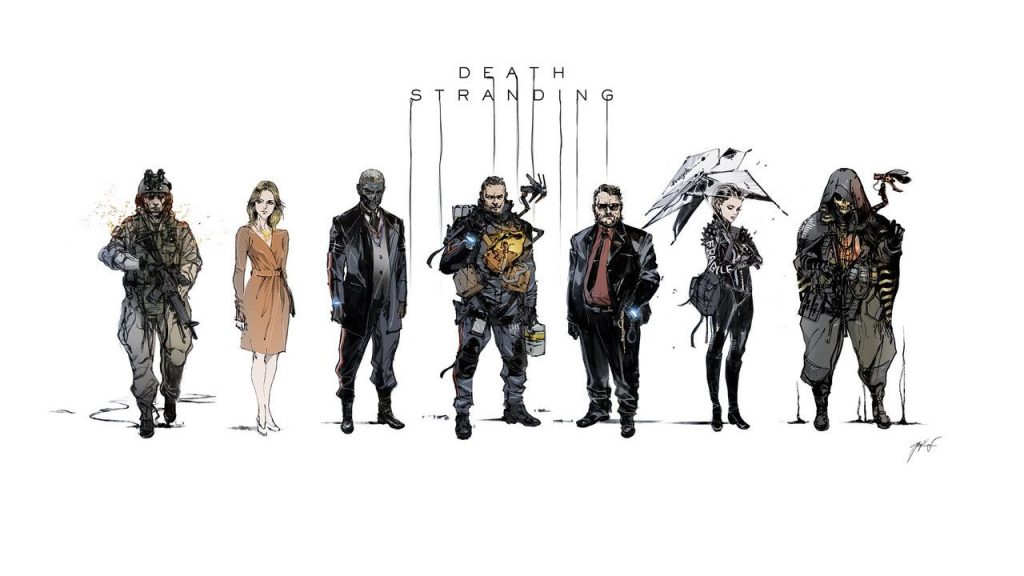
The game was released on November 8th 2019, to very polarising reviews and reception. The gameplay was almost literally a walking simulator, though it would be totally unfair to call it that. You play as an immortal courier delivering parcels in a post-apocalyptic world haunted by invisible entities, where society collapsed and survives only in underground bunkers. A timefall rain destroys everything it touches by fast-forwarding time in an instant, forcing people to hide underground. The world of the dead, represented by beaches, got too close to the surface, resulting in phenomena like souls stranded in the living world and, most dangerously, dead bodies bringing voidouts – explosions that annihilate vast space the size of an entire city. In such a world, the outside environment is extremely hostile, and death does not bring stillness or peace; it becomes something too familiar for the living. A simple postman delivery job is elevated to a heroic endeavour.
If you want to play the series, I recommend the Director’s Cut of the first game, as it adds some plot missions and prettier graphics on PS5, but you will not lose any of the experience by playing the original on PS4. I do not recommend jumping directly into the sequel, as you will lose most of the emotional impact the story’s progression brings.
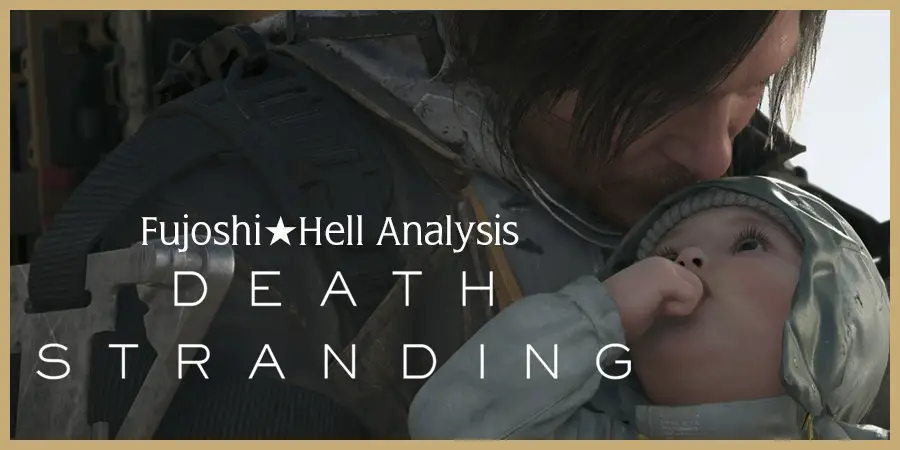
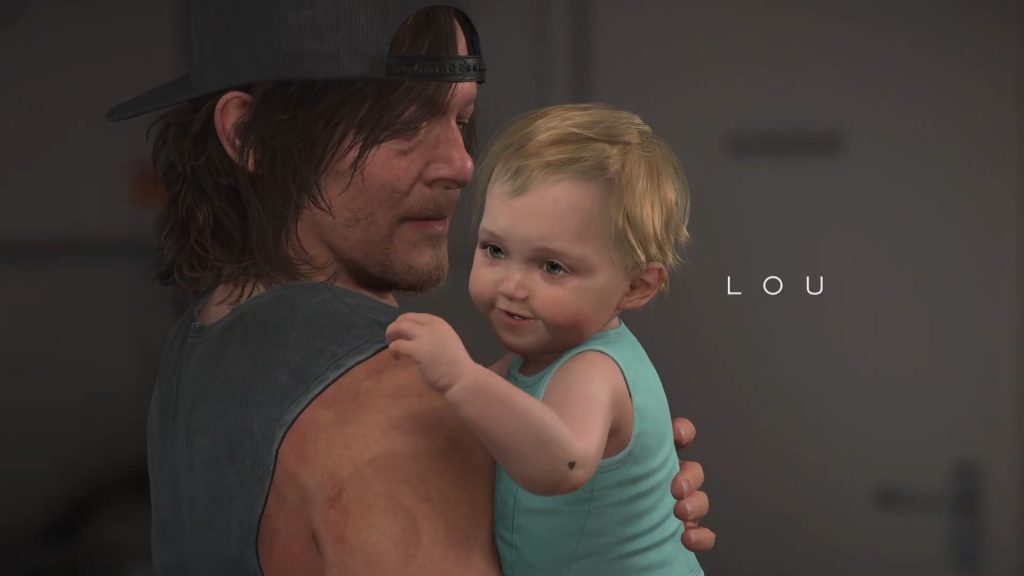
The dreadful, almost-survival-horror experience of the first game is absolutely astounding. The main character, Sam Porter Bridges, played by Norman Reedus, is one of my favourite portrayals of depression in media – the type that is brewing and stewing under your skin, numbing you while some other part of you moves forward and continues your life. Sam is considered a legend among porters, mostly for his supernatural ability called Dooms, which allows him to sense and avoid undead souls. That means he can travel alone, without additional equipment or people, which suits Sam just fine. His social anxiety and phobia of other people’s touch are definitely appeased by that, lone wolf and all that. In a dramatic turn of events, his lonely circumstances change when he gets a BB into his care: an unborn fetus extracted from a stillborn mother that is used as a piece of equipment to help see and detect undead entities due to its peculiar connection with life and death. Their meeting changes everything and sets in motion a cascade of events that would change the world. Sam is tasked with connecting the disjointed United States of America to the supernatural version of the Internet. As it can transport massive amounts of data and physical matter in seconds, it shall allow the postapocalyptic society to thrive again.
The lore of Death Stranding is vast and could be discussed for hours and hours, which you can familiarise yourself with by watching countless video essays on YouTube. I would like to discuss topics that the community may not focus on as much.
The grief and depression after losing loved ones is the core theme of the games, but even more so the lost of a child, both yet to be born and the one already welcomed to the world. The first game is closer to survival horror in its vibes, with a heavy, utterly helpless post-apocalyptic atmosphere. How are you supposed to find hope and move on from your grief in such times? Sam’s answer is to bury himself in physical work, delivering parcels. The BB he travels with cracks his shell, allowing him to find happiness again. He names the baby Lou after his late daughter, whom he never got to raise. After overcoming the story of the first game, Sam and Lou get their little happy ending, as we see them together, Lou surviving outside the pod with a rainbow above their heads. Sam finally moves on and finds a new meaning in his life.
I often wonder what Kojima originally had in mind for the sequel: he mentioned revising the script heavily due to the pandemic, probably to avoid prophesying too much again and to make a more optimistic continuation of Sam’s story. While I think he definitely succeeded in making a more hopeful sequel, hoo boy, I do wonder. Because he doubled down on making Sam suffer even more. Literally pulling the rug out from under him, causing him to lose everything he managed to rebuild in his life.
The game starts with Sam raising Lou in hiding, far from the government and anyone who may want to hurt them. The first case of a BB surviving outside a pod and being raised as a healthy child would definitely warrant unwanted attention on Lou. Both of them seem extremely happy: singing little songs and just enjoying a simple life. This ends dramatically after a brief visit from Fragile, who takes care of Lou while Sam is away for errands. The hideout is attacked, with Fragile on the brink of death and Lou gone, presumed dead. To say that killing a child was done out of malice may sound trivial and obvious, but this was done in pure hatred and revenge to maximise Sam’s suffering. The emotional punch aimed at both Sam and the players who spent many hours getting attached to Lou in her BB pod during the first game was unspeakable.
There are many revenge stories that start like that and evolve into what this genre’s expectation dictates. There is usually a lot of (rightfully so) anger and hatred. Many works try to argue that revenge is not the answer (it may not be). There is usually some emotional catharsis that allows a character to finalise or give up their quest for revenge, bringing their journey to a close and hopefully allowing them to move on.
Death Stranding 2 does a little twist to the formula: Sam does not become this agent of vengeance, but instead tries not to collapse under grief and PTSD reactivated anew. If he were not immortal, he would just kill himself, but he cannot die. He kills himself countless times but gets repatriated every time. What are you supposed to do with grief and tragedy that would normally break a person in an instant, but there is no escape? You literally have no way but to move on in any way you can. The usual overworking and dissociation can only get you so far, but what alternative is there?
This time is different, though: Sam is not alone. He has a whole network of people, old and new associates, that care about him, love him and want to support him as much as possible through his pain. One of the most interesting scenes in the game includes a group of pregnant women who have a peculiar affliction: their pregnancies are in some form of stasis, and they cannot give birth. Time seemed to stop inside their womb. In this world, pregnancy and unborn fetuses are experimented on, pregnant individuals, dead or alive, are smuggled and used as equipment. This forces pregnant women to band together to survive, literally with guns in their hands, protecting their hideout. Still, Sam, being a cis man who cannot get pregnant is welcomed to the Motherhood community just like their own as they recognise his complicated bereavement syndrome after losing Lou: he literally carried her for months in a pod with him everywhere he’d gone, gave ‘birth’ to her as he gave her a chance to survive outside the pod, then raised her. It is as close to a cis male pregnancy as it can be.
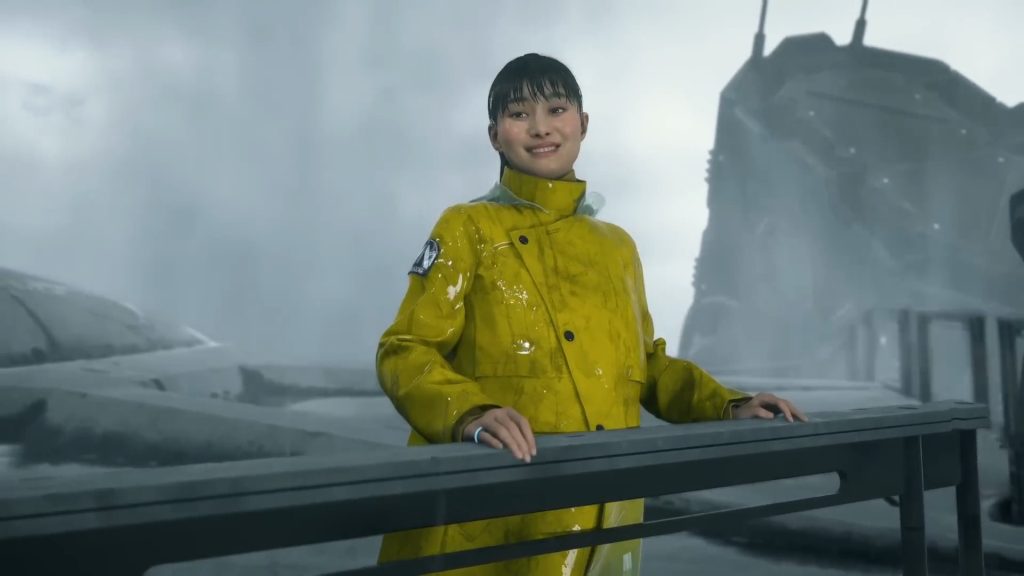
As the story progresses, Fragile gathers people into her crew, especially those affected by misfortune and tragedy. Among them is Rainy – one of my absolute favourite characters in the game. As her name may suggest, she brings Rainfall everywhere she goes. This led not only to her being ostracised but also to her being actively hunted by others who did not understand her abilities. Hoping to be ‘useful’ to society and be loved as a mother, she decided to get impregnated but even this didn’t stop the cruelty of people towards her. Impacted by the mysterious stillborn syndrome, she awaits the birth of her child yet to come. With time and kindness extended to her by Drawbridge staff, she learns to smile and to utilise her skills to control the weather.
One of the most heart-wrenching scenes in the game is when Sam gets trapped in an eternal fire: he burns to death, is then reanimated into his burning body and then dies again. And again. And again. This cycle of suffering has no end, and normal water cannot quench the inferno. They say burning to death is one of the worst ways to go, so imagine being stuck in that loop. The only salvation comes from Rainy, whose rain does not bring only destruction but life as well. Her abilities, which made her a pariah, can now save someone she cares about.
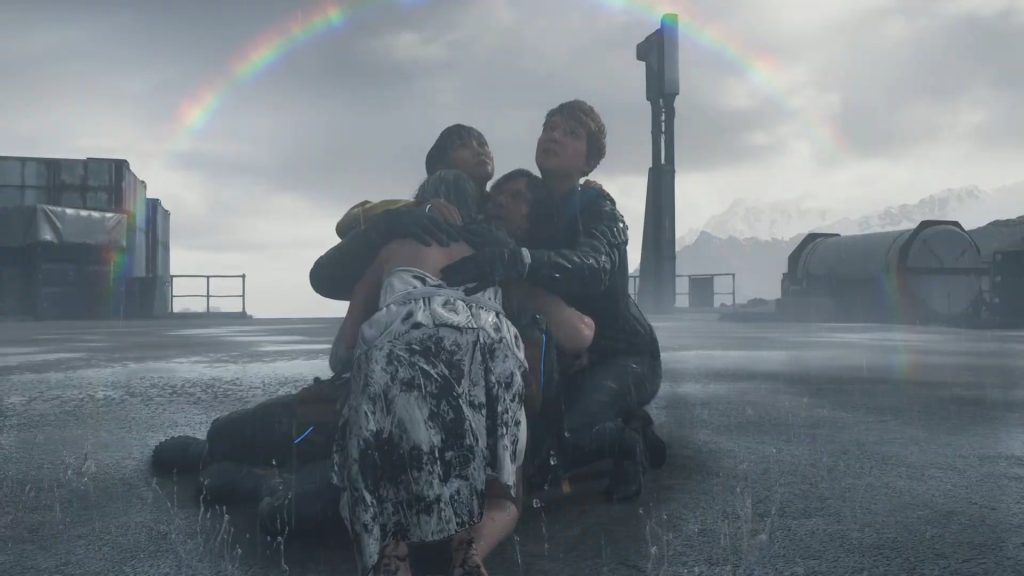
Despite the heavy topics, the sequel to Death Stranding is a much more hopeful game than it may seem. There is a celebratory vibe that we as a society can overcome hurdles in our path, even in a postapocalyptic reality. We are not hopeless anymore: we got tools and determination to survive the reality we have been given. In contrast to the first game, Sam has more infrastructure to build and utilise on his daily trek, often at the expense of the impeccable horror and loneliness of the first game. Nevertheless, the mix of this positive outlook and absolutely depressing themes gives this title a very interesting flavour that got me hooked from day one.